
There’s something wonderfully nostalgic about a steaming bowl of savory porridge, especially when it’s homemade. Today, I’m excited to share my take on Cháo Gá, a traditional Vietnamese chicken rice porridge that warms both the stomach and soul. This comforting dish is not only a fantastic option for meal prep but also a delightful choice for any age, making it a perfect family favorite. With tender shreds of poached chicken and an aromatic broth topped with crispy shallots and fresh herbs, this Vietnamese chicken rice porridge truly embodies comfort food at its best. Are you ready to create a heartwarming meal that feels like a warm hug? Let’s dive in!
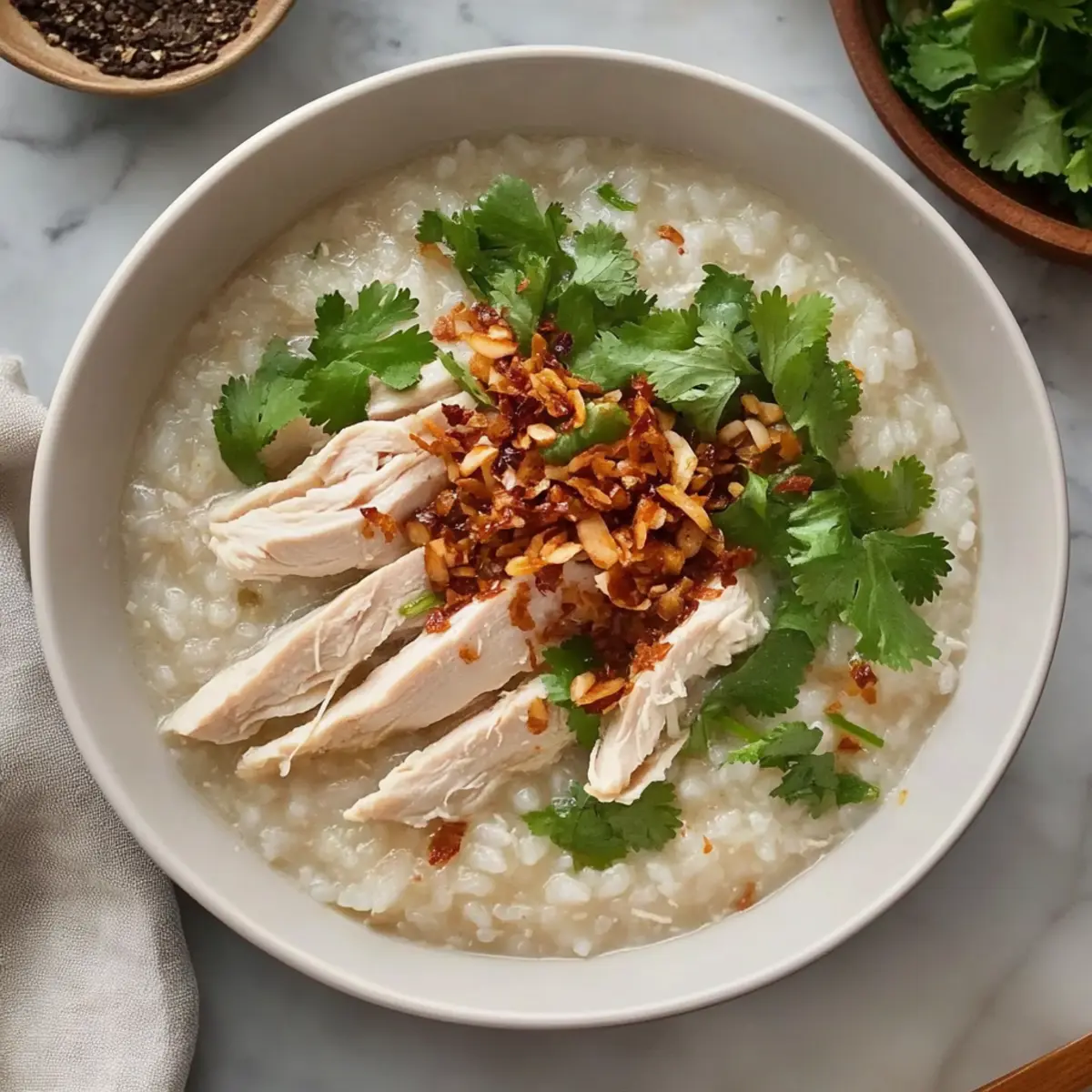
Why is Cháo Gá a Comfort Food?
Nostalgic Experience: Every spoonful brings back memories of home, making it the perfect comfort dish for all ages.
Heartwarming Flavor: The soothing broth, combined with savory chicken and aromatic herbs, creates a delightful taste that warms the soul.
Easy Meal Prep: Whip up a big batch and enjoy leftovers throughout the week—a great change from fast food.
Adaptable Ingredients: Feel free to customize; swap chicken for tofu or add your favorite veggies for extra nutrition, making it versatile for everyone.
Family-Friendly: It’s a dish that brings people together, ideal for cozy gatherings or simple weekday dinners, ensuring a delicious meal everyone can enjoy!
Vietnamese Chicken Rice Porridge Ingredients
• Let’s gather everything you need for the perfect bowl of cháo gá!
For the Broth
- Whole Free-Range Chicken – Provides rich flavor to the broth; opt for organic for the best taste.
- Shallots – Adds sweetness and depth to the broth; substitute with onions if needed.
- Ginger – Enhances warmth and flavor; fresh ginger is preferable for a zesty kick.
- Salt – Essential for seasoning; adjust to taste for balance.
- Palm Sugar – Adds subtle sweetness; can be substituted with brown sugar if necessary.
- Water – The foundation of the broth; using filtered water ensures purity.
For the Porridge
- Long-Grain Jasmine Rice – Creates that creamy porridge texture; be sure to wash it well.
- Chicken Bouillon Powder – Enhances flavor; optional if using homemade broth.
- Granulated Sugar – Provides a touch of balance; add as needed.
- Fish Sauce – Introduces umami depth; can be omitted for a vegetarian variant.
- Black Pepper – For seasoning; add according to your flavor preference.
For Garnishing
- Cilantro & Green Onions – Fresh herbs add brightness; substitute with parsley if you’re in a pinch.
- Fried Shallots – A crunchy topping that elevates the dish; homemade ones are delightful!
Now that you have your ingredients ready, get set for a culinary adventure in comfort food!
Step‑by‑Step Instructions for Chao Ga (Vietnamese Chicken Rice Porridge)
Step 1: Prepare Chicken
In a large pot, place the whole free-range chicken along with halved shallots, fresh ginger, salt, and palm sugar. Cover everything with approximately 3 liters of filtered water. Bring the mixture to a vigorous boil over medium-high heat, then reduce the heat, cover the pot, and let it simmer gently for 1 hour, ensuring the chicken is fully cooked and tender.
Step 2: Shred Chicken
Once the chicken is cooked, carefully remove it from the pot and allow it to cool in ice water for a few minutes. This step helps to make handling easier. As the chicken cools, shred it into bite-sized pieces using your hands or forks, discarding any bones and the ginger and shallots from the broth. Set the shredded chicken aside while preparing the porridge.
Step 3: Toast Rice
In a skillet over medium heat, add a drizzle of oil, then toss in minced shallots. Sauté until they turn translucent and fragrant, about 3-5 minutes. Next, add the washed and drained long-grain jasmine rice to the skillet. Stir continuously for another 5-7 minutes until the rice becomes lightly golden, enhancing the flavor for the cháo gá.
Step 4: Cook Porridge
Once the rice is toasted, transfer it to the pot with the chicken broth. Bring the mixture to a boil on high heat for about 10 minutes, stirring frequently to prevent sticking. Then, reduce the heat and let the porridge simmer uncovered. Cook for an additional 35-40 minutes, stirring occasionally, until it reaches a creamy, slightly thick consistency.
Step 5: Season & Serve
After the porridge reaches your desired consistency, season it with chicken bouillon powder, salt, granulated sugar, and fish sauce to taste. Stir well to combine all the flavors. Serve the hearty chao ga hot in individual bowls, topping each with shredded chicken, a sprinkle of black pepper, crispy fried shallots, cilantro, and chopped green onions for a fresh finish.
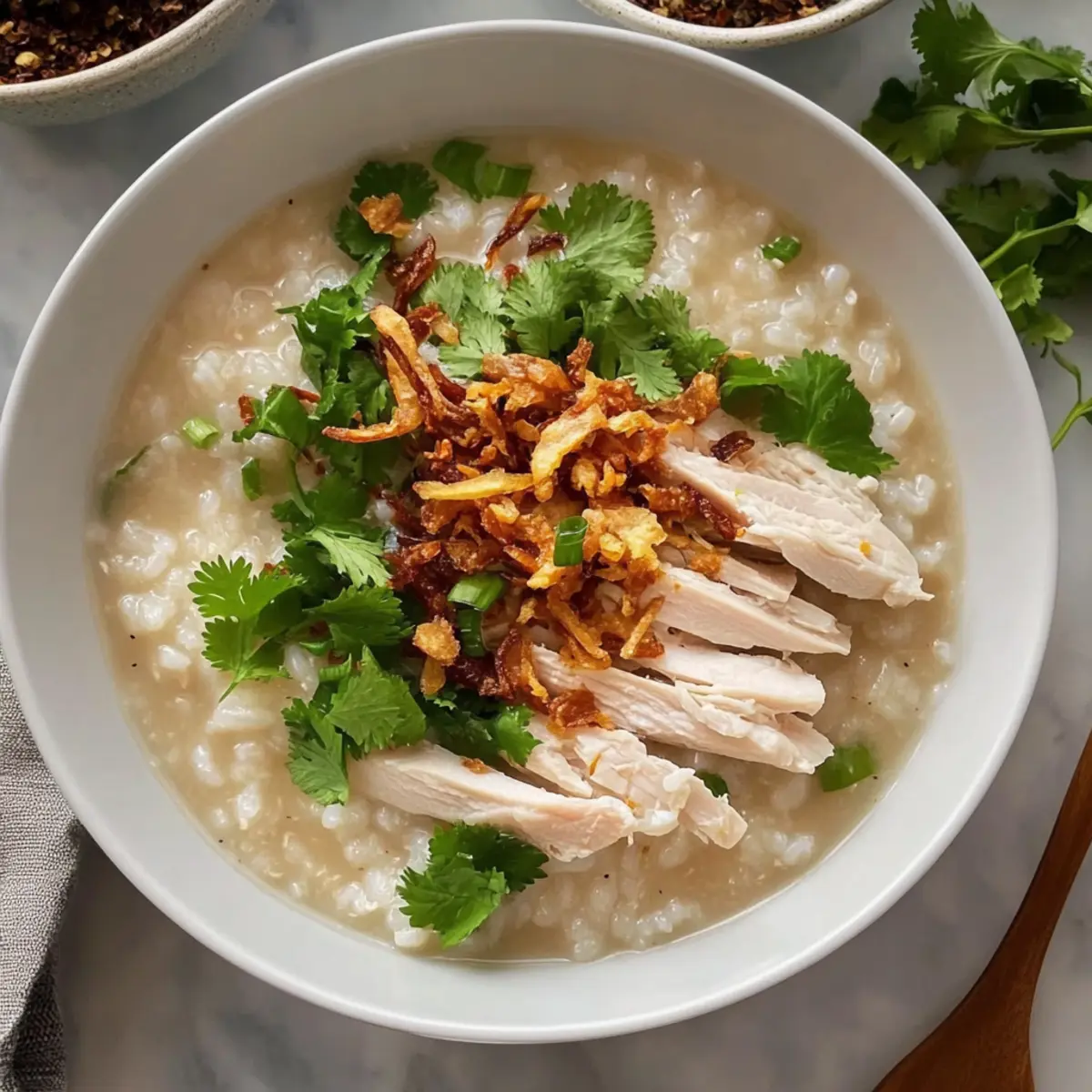
What to Serve with Comforting Vietnamese Chicken Rice Porridge
Create a delicious, heartwarming meal by pairing your bowl of cháo gá with these delightful accompaniments.
-
Fresh Lime Wedges: Brightens the porridge with a zesty kick, enhancing its rich flavors and making each bite more vibrant.
-
Crispy Egg Rolls: These crunchy bites provide a wonderful texture contrast to the creamy porridge, with savory fillings complementing the chicken.
-
Steamed Bok Choy: The tender greens add freshness and subtle bitterness, balancing the dish’s richness and providing a nutritious boost.
-
Sweet Chili Sauce: A drizzle introduces a sweet and spicy element, elevating the flavor profile while appealing to those who enjoy a little heat.
-
Vietnamese Iced Coffee: Start your meal off with a delightful pick-me-up, as the bold coffee pairs perfectly with the comforting food.
-
Mango Sticky Rice: For dessert, this sweet treat offers a luscious, fruity finish that contrasts beautifully with the savory porridge.
Serve these accompaniments alongside your comforting cháo gá for a well-rounded and satisfying meal experience!
Make Ahead Options
Cháo Gá is a fantastic meal prep option for busy home cooks! You can prepare the broth and poached chicken up to 3 days in advance. Simply follow the initial steps of cooking the chicken, allowing it to cool before shredding; store it in an airtight container in the refrigerator. The toasted rice can also be prepped ahead; keep it sealed until you’re ready to make the porridge. When it’s time to serve, combine the broth and rice, then simmer until heated through, adding water if needed for consistency. This way, you’ll have a comforting, homemade meal that feels just as delightful and fresh!
Expert Tips for Chao Ga
-
Quality Chicken Matters: Choose high-quality free-range chicken for an ultra-flavorful broth. It significantly enhances the overall taste of your Vietnamese chicken rice porridge.
-
Taste Along the Way: Always taste your broth and porridge as they simmer. This allows you to adjust the seasoning, ensuring a perfectly balanced flavor at the end.
-
Perfect Rice Texture: If you prefer a creamier texture for your cháo gá, let the rice cook longer or blend a small portion before mixing it back into the pot for an extra smooth finish.
-
Don’t Skip the Herbs: Fresh herbs like cilantro and green onions not only elevate the presentation but also add freshness. Don’t skip them for that authentic Vietnamese touch!
-
Flavor Boosters: Feel free to experiment with additional toppings like lime wedges or fresh ginger slices to customize your Vietnamese chicken rice porridge to your liking.
Variations & Substitutions for Vietnamese Chicken Rice Porridge
Feel free to explore your creativity and customize this comforting Vietnamese chicken rice porridge to your family’s taste!
-
Quinoa Swap: Use quinoa instead of rice for a hearty, gluten-free dish with a nutty flavor. It enhances the texture while retaining a comforting quality.
-
Vegetarian Delight: Substitute the chicken with marinated tofu or mushrooms for a vegetarian-friendly version that doesn’t skimp on flavor. Add a dash of soy sauce for an umami boost!
-
Flavor Explosion: Garnish with fresh herbs like basil or mint for an aromatic twist that heightens the dish’s freshness. Pair it with a hint of lime juice for a zesty kick!
-
Spicy Kick: Add thinly sliced Thai chilis or crushed red pepper flakes to bring a fiery taste to your porridge. Adjust the heat to suit your preference and awaken your taste buds!
-
Nutty Texture: Toss in some chopped peanuts or cashews for an unexpected crunch that pairs beautifully with the soft porridge. It’s a delightful way to elevate your presentation!
-
Broth Boost: Enhance your broth with a splash of coconut milk for a creamy richness that adds depth. This twist brings a tropical flair to your meal—a taste of Vietnam at home!
-
Herb Fusion: If fresh cilantro is unavailable, parsley or scallions can serve as excellent substitutes, imparting flavor and a splash of color without losing the dish’s essence.
-
Ultimate Comfort Combo: Serve with a side of crispy fried shallots or a dollop of hoisin sauce for extra layers of flavor. These toppings give your dish that final comforting touch!
For a delicious twist, you might also enjoy pairing your cháo gá with the refreshing flavors of Lime Chicken Rice or the slightly sweet notes of Honey Garlic Chicken. Explore these variations to find your own perfect bowl!
How to Store and Freeze Cháo Gá
Fridge: Store any leftover Vietnamese chicken rice porridge in an airtight container for up to 3-5 days. Reheat gently on the stovetop, adding a splash of water to rehydrate if needed.
Freezer: You can freeze cháo gá for up to 2 months. Allow it to cool completely before storing it in airtight freezer bags or containers. Thaw overnight in the fridge before reheating.
Reheating: When ready to enjoy, reheat the porridge on low heat, stirring frequently. Add a little water or broth to restore the creamy consistency.
Serving Freshness: For the best taste, try to consume the porridge within a week. The flavors meld beautifully but may lose some texture over time.
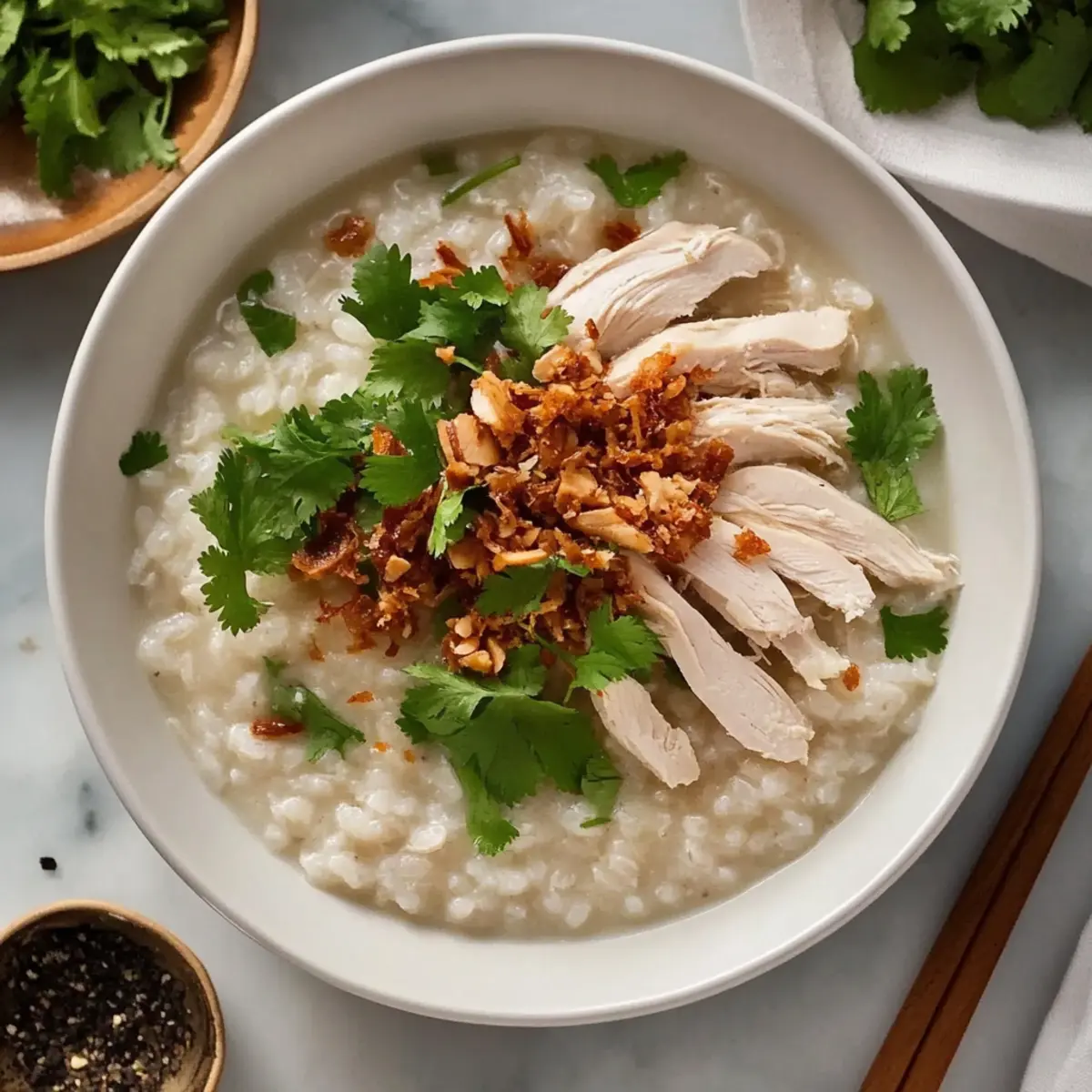
Cháo Gá (Vietnamese Chicken Rice Porridge) Recipe FAQs
What is the best chicken to use for cháo gá?
Absolutely! For the best flavor, I recommend using a whole free-range chicken. The rich taste of the broth comes from high-quality chicken, enhancing the overall experience of the porridge.
How should I store leftover cháo gá?
You can store any leftovers in an airtight container in the refrigerator for up to 3-5 days. When you’re ready to enjoy it again, gently reheat on the stovetop. I suggest adding a splash of water to rehydrate the porridge, keeping it creamy and delicious!
Can I freeze cháo gá?
Yes, you can freeze cháo gá for up to 2 months! Allow it to cool completely before transferring it to airtight freezer bags or containers. When you’re ready to enjoy, let it thaw overnight in the fridge, then reheat on low heat, stirring frequently and adding a little water or broth if necessary.
What should I do if my porridge is too thick?
If your porridge turns out too thick, don’t fret! Simply add a bit more water or chicken broth during reheating to reach your desired consistency. Stir well and let it simmer until warmed through. I often find this helps restore that comforting, creamy texture.
Are there any dietary restrictions to consider when making cháo gá?
Certainly! If you are preparing this dish for someone with allergies, consider that the recipe contains chicken, fish sauce, and sugar. For a vegetarian option, you can replace the chicken with tofu or mushrooms and omit the fish sauce. Always check ingredient labels for hidden allergens if you’re serving someone with dietary restrictions.
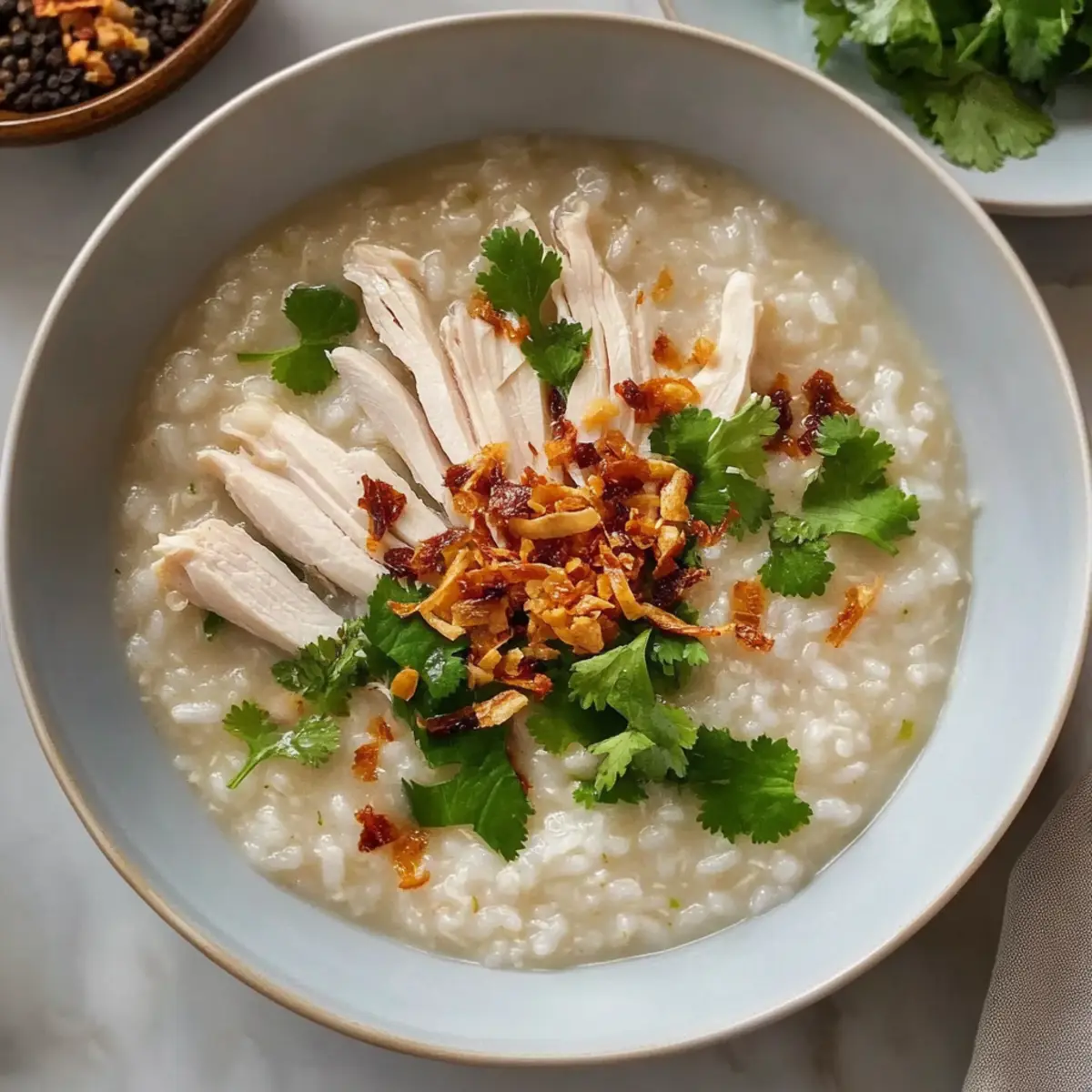
Hearty Chao Ga: Vietnamese Chicken Rice Porridge Bliss
Ingredients
Equipment
Method
- In a large pot, place the whole free-range chicken along with halved shallots, fresh ginger, salt, and palm sugar. Cover with filtered water. Bring to a vigorous boil, then simmer for 1 hour.
- Once cooked, remove the chicken and cool it in ice water. Shred the chicken and set aside while preparing the porridge.
- In a skillet over medium heat, add oil and sauté minced shallots until translucent. Add washed rice and toast for 5-7 minutes.
- Transfer toasted rice to the pot with broth. Bring to a boil, then simmer uncovered for 35-40 minutes until creamy.
- Season with chicken bouillon powder, salt, granulated sugar, and fish sauce. Serve hot, topped with shredded chicken, black pepper, fried shallots, cilantro, and green onions.
Leave a Reply